

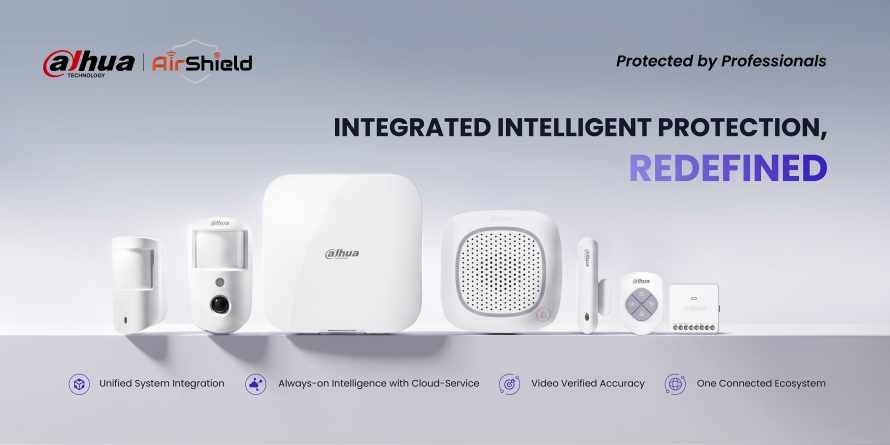

Dahua Technology is pushing its AirShield alarm system deeper into the world of intelligent security, where alarms are no longer just noisy boxes waiting for someone to panic. The upgraded system focuses on cloud services, video verification, device interconnection, and flexible integration, giving installers, users, and alarm receiving centers a more connected way to handle modern property protection.
The idea behind Dahua AirShield is fairly straightforward: make alarm systems easier to deploy, easier to verify, and easier to manage across multiple devices. Instead of treating alarms, CCTV, video doorphones, and access control as separate islands, AirShield is designed to bring them into a more unified security ecosystem. Finally, fewer dashboards pretending to be helpful.
Cloud Operations Make Alarm Management Less Painful
Traditional alarm systems can be annoyingly rigid, especially when maintenance requires physical access, dedicated keypads, or PC-based configuration. AirShield improves this with cloud-enabled tools that allow installers to configure devices remotely through a mobile app. Cloud-based diagnostics also help reduce repeated site visits, which is good news for both service teams and everyone tired of waiting for “the technician is on the way.”
For end users, the system supports instant alarm notifications, remote arming and disarming, and one-click access to professional security services. Users can also manage alarms alongside CCTV, VDP, and access control systems from a centralized platform. This creates smarter cross-system linkage, so an alarm event can connect with visual evidence instead of leaving users guessing whether it is a real threat or just a curtain having a dramatic moment.
Video Verification Adds Context to Every Alarm
One of the biggest upgrades in Dahua AirShield is its focus on video verification. The system supports PIR-Cam, hardware linkage, and software linkage modes, giving users and monitoring teams more ways to confirm what triggered an alarm. PIR-Cam uses RF-HD transmission to send six 1600 x 1200 images to mobile apps or monitoring software within six seconds over the 2.4GHz band.
In hardware linkage mode, the alarm panel acts as the central brain, connecting IPC devices through LAN. Alarm rules are stored locally in the panel, allowing fast execution even before cloud upload happens. Video is uploaded only once to the cloud through the public network, helping reduce latency and improve reliability. A 4G backup keeps transmission active when the main network drops, because apparently even criminals and routers enjoy bad timing.
Interconnection Reduces Fragmented Security Setups
AirShield also tackles the messy reality of fragmented security systems. Through standardized protocols, the hub can connect IPC, NVR, and alarm systems, allowing users to arm or disarm devices and view video clips directly from alarm logs. Only alarm-triggered footage is uploaded, which supports offline IPC operation while also helping with privacy protection.
Another practical advantage is that IPCs can replace traditional PIR-Cams in certain deployments. This can reduce installation costs and simplify setup, especially for sites that already use Dahua cameras. For alarm receiving centers, this means less dependence on separate video platforms, servers, and licenses. In VTH interconnection, indoor video terminals can work as visual alarm keypads, offering large-screen control, real-time alerts, and device status visibility.
Flexible Integration for Professional Monitoring
For ARCs and developers, Dahua AirShield provides multiple integration options. SIA integration allows automatic event reporting through standard protocols without secondary development. Parameters configured in Dahua DoLynk Cloud can be delivered automatically to alarm hosts, reducing manual setup and configuration errors.
Converter integration supports both standard and proprietary protocols, including remote access, disaster recovery, and image or video forwarding. Cloud mode enables direct login for data forwarding, while direct mode supports pre-configured IP and port settings that are delivered automatically to hubs. Dahua DoLynk Developer integration also provides Open ARC and Open IoT API sets for remote control, status monitoring, report export, full configuration, and OEM collaboration.
Overall, Dahua AirShield feels less like a single alarm product and more like a connected security framework built for real-world professional monitoring. Pricing and regional availability were not detailed in the announcement, but Dahua Technology positions the upgraded AirShield system as a milestone for integrated intelligent alarm management across residential, commercial, and ARC-driven deployments.
| Feature | Details |
|---|---|
| Product | Dahua AirShield Intelligent Alarm System |
| Core Upgrades | Cloud services, video verification, device interconnection, and system integration |
| Cloud Functions | Remote configuration, cloud diagnostics, instant alerts, remote arming and disarming |
| User Management | Centralized control for alarm systems, CCTV, VDP, and access control |
| Video Verification Modes | PIR-Cam, hardware linkage, and software linkage |
| PIR-Cam Image Upload | Six 1600 x 1200 images within six seconds over 2.4GHz RF-HD transmission |
| Network Backup | 4G backup for alarm transmission during network outages |
| CCTV Interconnection | Supports IPC, NVR, alarm logs, video clips, and alarm-triggered footage upload |
| VTH Interconnection | Indoor video terminals can function as visual alarm keypads |
| ARC Integration | SIA integration, converter integration, Open ARC API, and Open IoT API |
| Target Users | Installers, end users, alarm receiving centers, and developers |