

Meta has announced Ray-Ban Meta Audio, a camera-free pair of smart glasses built around open-ear listening, calls, and hands-free access to an AI assistant. The frames weigh 43 grams and start at $349 in the United States. Preorders opened with the announcement, and shipping is scheduled for October 13.

A different branch of smart glasses
The new model removes the photo and video camera found on other Ray-Ban Meta products. That distinction narrows the hardware around audio and voice interaction while avoiding a recording camera on the wearer’s face. The open-ear speakers are intended to play music and podcasts while leaving surrounding sound audible, and microphones handle calls and spoken requests. A Philips in-ear headphone overview provides a contrast with conventional sealed listening hardware. Actual performance in traffic, wind, and other noisy settings has not yet been independently established.
Meta describes this as its lightest and slimmest AI-glasses design. Professional-adjustable temple tips, swappable or adjustable nose pads, and overextension hinges provide several ways to change the fit. The frames are compatible with a range of optical prescriptions, though lens choices and prescription costs may change the final configuration.
Battery life extends through the case
The company rates the glasses for up to 12 hours on one charge. The included charging case is listed as providing as much as 48 additional hours, creating a combined system intended for multiple days away from a wall charger. Those figures are manufacturer estimates, and listening volume, calls, AI requests, wireless conditions, and other usage patterns can affect real-world endurance.
Two frames and 23 combinations
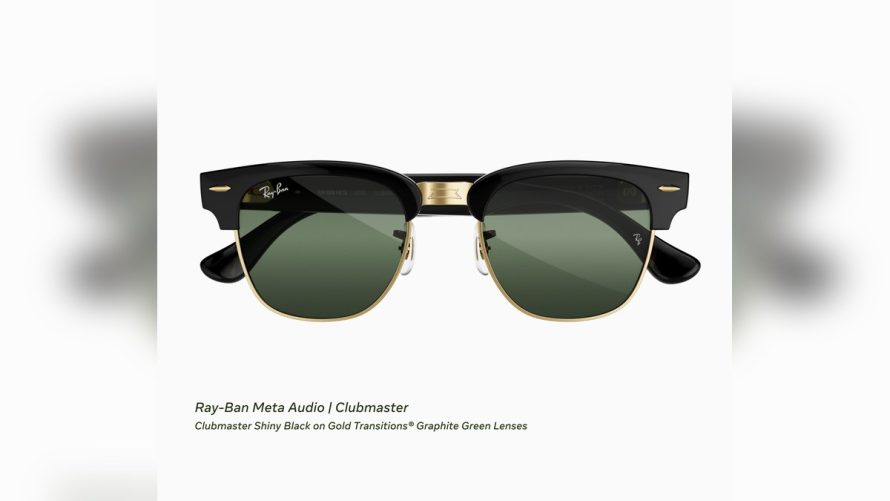
Ray-Ban Meta Audio will be offered in Clubmaster and Burbank shapes. Clubmaster uses the familiar browline profile, while Burbank is a rectangular frame. Across both styles, Meta lists 23 frame-color and lens combinations. The product sits alongside camera-equipped Ray-Ban Meta glasses rather than replacing them, giving buyers a choice based on whether capture features are useful or unwanted.
AI access remains part of the design
Wearers can speak with the assistant without taking out a phone. Meta lists uses such as requesting sports scores, finding local restaurants, translating conversations, playing audio, and handling calls. Some functions depend on network access, compatible services, supported languages, and regional availability. The announcement also discusses a connection to a personal AI agent from Muse, but the value of that broader system will depend on the software and account features available to each user.
The product’s clearest distinction is the combination of discreet audio hardware and AI access without an onboard camera. Comfort, sound leakage, microphone quality, assistant reliability, and battery life remain important points for later independent testing. Product specifications and ordering dates are documented by Meta.
| Weight | 43 grams |
|---|---|
| Camera | None |
| Rated battery | Up to 12 hours |
| Charging case | Up to 48 additional hours |
| Starting price | $349 in the US |