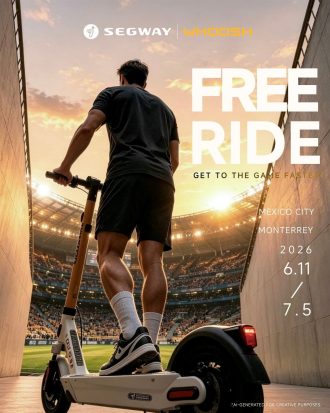
Segway Commercial and Whoosh are turning shared micromobility into a practical World Cup travel hack with a free ride campaign across Mexico. Instead of asking fans to battle traffic, parking costs, and the sacred chaos of match-day transportation, the campaign gives users access to complimentary scooter rides in key host cities during the 2026 tournament period.
The campaign started in Mexico City on June 10 and is set to expand to Monterrey within the following two weeks, running through July 5. Together, Segway Commercial and Whoosh are sponsoring thousands of rides, with users able to redeem one free trip by entering the promotional code RIDEWITHSEGWAY in the operator apps.
A Smarter Way to Handle Match-Day Movement
Large sporting events tend to expose every weak point in a city’s transport system, because apparently millions of people moving at once is still hard. The Segway and Whoosh campaign focuses on short-distance trips between transit hubs, stadium areas, fan zones, and nearby destinations, where last-mile mobility can make a real difference.
Each free ride includes scooter unlocking and up to 20 minutes of riding, subject to daily availability and limited quantities. That makes the offer especially useful for fans who need a quick connection after public transport, or for visitors trying to avoid expensive parking near crowded venues.
Why Micromobility Fits Big Events
Shared scooters are not a full replacement for buses, metro lines, or walking, but they can fill the annoying little gaps that ruin a trip. During the World Cup period, demand around stadiums and public gathering areas can spike quickly, making shared micromobility a flexible support layer for urban transport.
The campaign also shows how operators can plug mobility services into event planning without building permanent infrastructure from scratch. For cities dealing with temporary travel surges, scooters can help spread movement across more routes and reduce pressure on parking-heavy areas.
Segway Hardware Meets Whoosh Operations
The partnership combines Segway Commercial’s shared mobility technology with Whoosh’s local operating network in Mexico. That pairing matters because scooters used in public fleets need more than sleek looks; they need dependable hardware, fleet management, app integration, and enough operational discipline to survive actual humans.
Whoosh positions the program as a way to complement existing transport options in Mexico City and Monterrey. The goal is not just to hand out free rides, but to make short urban trips easier during a period when football fans, residents, and tourists are all competing for the same roads and transit links.
A Blueprint for Event-Based Urban Transport
Beyond the free ride promotion, the campaign points to a broader shift in how cities may handle large international events. Instead of treating scooters as a side novelty, event planners can use them as part of a connected transport mix, especially for short trips that are too far to walk but too awkward for a car.
Pricing and availability are straightforward: the campaign offers one complimentary ride through the Whoosh app using the code RIDEWITHSEGWAY, including unlock and up to 20 minutes of riding, while daily quantities last. Segway Commercial and Whoosh say the initiative will continue through July 5, leaving a useful model for future host cities that want cleaner, easier, and less parking-obsessed mobility.
| Program Item | Description |
|---|---|
| Campaign | Free ride campaign for shared scooter trips during the 2026 World Cup period in Mexico. |
| Companies | Segway Commercial provides shared micromobility technology, while Whoosh operates the ride service. |
| Launch City | Mexico City, starting June 10. |
| Expansion City | Monterrey, planned within the following two weeks after launch. |
| Campaign Period | Runs through July 5, subject to daily ride availability. |
| Promo Code | RIDEWITHSEGWAY. |
| Free Ride Details | Includes scooter unlocking and up to 20 minutes of riding. |
| Main Use Case | Short-distance travel between transit hubs, stadium areas, fan zones, and key urban destinations. |