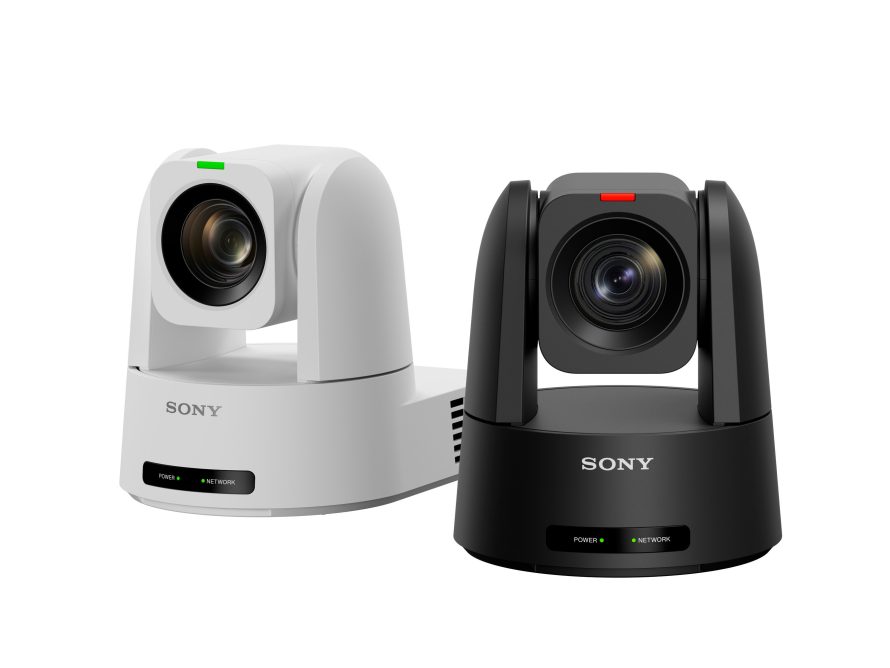
Sony Electronics is expanding its professional PTZ camera lineup with two compact 4K models built for modern classrooms, meeting rooms, venues, studios, and sports environments. The new Sony SRG-AS10 and SRG-XS10 share a lightweight design, 4K 60p capture, a 1/2.8-type 4K STARVIS image sensor, smooth pan and tilt movement, and flexible installation options. The big difference is intelligence: the SRG-AS10 adds AI-powered auto framing and sports tracking, while the SRG-XS10 focuses on straightforward 4K PTZ capture for everyday streaming and recording.
Both cameras are designed for spaces where a full camera crew is either too expensive, too impractical, or simply another reminder that cables still run the world. With 10x optical zoom in 4K and up to 20x zoom in Full HD through Tele Convert Mode, the SRG-AS10 and SRG-XS10 can cover close-ups, lecture capture, conference rooms, halls, theaters, gymnasiums, and other mixed-use AV setups without demanding a bulky rig.
Two Compact PTZ Cameras, Two Different Jobs
The SRG-AS10 is the more advanced model in the pair because it includes PTZ Auto Framing powered by Sony proprietary AI analytics. It can automatically recognize and track subjects, then adjust framing to keep the composition natural during lectures, presentations, meetings, ceremonies, and content capture. That makes it especially useful when there is no dedicated camera operator, which is disturbingly common in the real world where everyone wants video but nobody wants to operate the camera.
The SRG-XS10 is positioned as the simpler, more basic 4K PTZ camera. It keeps the same core imaging idea with a 4K STARVIS sensor, compact body, low-light capability, and flexible installation, but skips the advanced subject tracking features of the AS10. For schools, offices, and small venues that mostly need reliable camera coverage for streaming, recording, or online meetings, the XS10 looks like the more practical choice.
4K 60p Capture With Better Low-Light Performance
Both models use a 1/2.8-type 4K image sensor with Sony STARVIS technology, which is designed to support clearer imaging in lower-light environments. That matters in classrooms, worship spaces, conference rooms, backstage areas, gyms, and multipurpose venues where lighting is often decided by whoever last touched the wall switch. The cameras support 4K 60p video, making motion look smoother for human movement, presentations, and faster subjects.
The zoom setup is also shared across the two models. Users get 10x optical zoom when shooting in 4K, while Full HD output can reach up to 20x zoom using Tele Convert Mode. That gives AV teams more flexibility when placing cameras farther from the action, such as at the back of a hall, above a court, near a stage, or inside a narrow production space where a person with a camera would be gloriously inconvenient.
AI Framing Gives the SRG-AS10 Its Edge
The SRG-AS10 clearly targets more demanding automated production workflows. Its PTZ Auto Framing function can follow a subject and continuously adjust the shot to maintain a natural-looking frame. This is useful for remote lectures, online classes, executive presentations, internal corporate streams, webinars, and creator-style productions where the camera needs to react without someone constantly steering it like a tiny robotic boat.
The AS10 also adds Ball Sports Basketball Mode, which is made for indoor full-court basketball capture from a wide shot. Instead of only following players, the system is designed to recognize the court area and track the fast, irregular movement of the ball. The camera can also handle multi-person framing, keeping up to eight specified people in the frame, which helps in panels, conferences, ceremonies, weddings, sports, and worship services.
Built for AV Integration, Not Just Pretty Video
Sony did not stop at image quality, because professional AV setups are never allowed to be simple. The cameras support SDI and HDMI outputs, while also coming with NDI HX2 pre-installed. They support IP streaming protocols including RTSP, RTMP, and SRT, making them suitable for remote production, network-based workflows, and hybrid event setups.
Both models also support PoE++, allowing power, video, and control to run through a single LAN cable. That is a practical advantage for scalable installations in schools, offices, studios, and venues where fewer cables mean fewer opportunities for someone to trip, complain, or blame IT. A web-based user interface also allows operation from a tablet or PC through a browser, which should make setup and daily control more accessible.
Which Sony 4K PTZ Camera Makes More Sense?
The SRG-AS10 is the better fit for users who need automation, intelligent tracking, and more dynamic capture. Education teams, corporate AV departments, sports facilities, houses of worship, and event venues may benefit from its AI-powered subject tracking, basketball mode, and multi-person framing. The SRG-XS10 makes more sense for simpler streaming and recording needs where dependable 4K PTZ performance matters more than automated camera intelligence.
Both cameras are expected to be available near the end of 2026, and Sony Electronics plans to display them at InfoComm in Las Vegas from June 17 to 19, 2026, at booth C8301. Pricing has not been announced in the press release, so the final buying decision will depend on how Sony Electronics positions the SRG-AS10 against the more streamlined SRG-XS10.
| Feature | Sony SRG-AS10 | Sony SRG-XS10 |
|---|---|---|
| Camera Type | 4K PTZ Auto Framing Camera | Basic 4K PTZ Camera |
| Maximum Video Support | 4K 60p | 4K 60p |
| Image Sensor | 1/2.8-type 4K image sensor with STARVIS technology | 1/2.8-type 4K image sensor with STARVIS technology |
| AI Auto Framing | Yes, with Sony proprietary AI analytics | Not specified |
| Ball Sports Mode | Yes, Basketball Mode for indoor full-court capture | Not specified |
| Multi-Person Framing | Yes, up to eight people | Not specified |
| Optical Zoom | 10x in 4K | 10x in 4K |
| Full HD Zoom | Up to 20x using Tele Convert Mode | Up to 20x using Tele Convert Mode |
| Pan/Tilt Performance | Smooth natural movement from start to stop | Smooth natural movement from start to stop |
| Installation | Tripod and ceiling mount support | Tripod and ceiling mount support |
| Outputs | SDI and HDMI | SDI and HDMI |
| IP and Streaming Support | NDI HX2, RTSP, RTMP, SRT | NDI HX2, RTSP, RTMP, SRT |
| Power and Control | PoE++ support through single LAN cable | PoE++ support through single LAN cable |
| Best For | Remote learning, corporate streaming, sports capture, events, worship, multi-person scenes | Lecture capture, internal streaming, online meetings, basic 4K recording |
| Availability | Expected near the end of 2026 | Expected near the end of 2026 |